Apps have a glamour problem. Every business owner has, at some point, thought “we should have an app” — usually right after seeing a competitor’s, or a slick one from a big brand. But the honest truth is that most small businesses don’t need a phone app, and the ones who do often don’t need the expensive version.
This guide is the straight answer: what apps actually do for Irish businesses, who genuinely benefits, what it costs, and the cheaper option most people never get told about.
The two kinds of app worth building
Forget the hype for a second. In practice, business apps fall into two useful camps.
1. An app for your customers
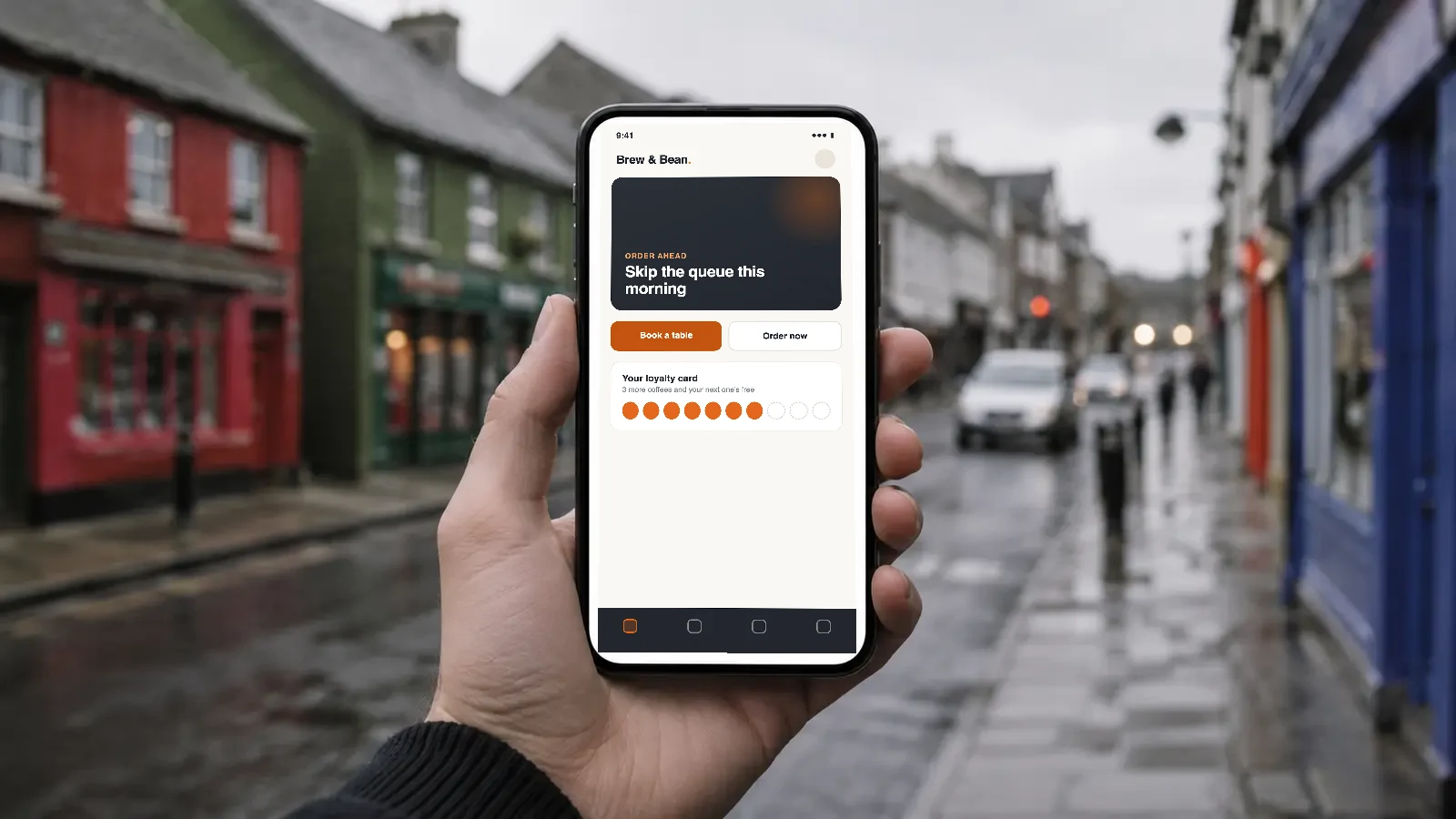
This puts your business on your customers’ phones — somewhere they can book, order, pay, or collect loyalty points in a couple of taps. The kind of thing that turns a one-off customer into a regular.
It works best for businesses people use repeatedly: a Dublin café with a loyalty scheme, a takeaway with regular orders, a gym or studio with class bookings. If customers interact with you weekly, an app on their home screen earns its place. If they use you once a year, it won’t.
2. An app for your team
This is the one that quietly saves the most money, and the one people think of least. It’s a tool for the people out on the road or on site — log jobs, snap photos, capture sign-offs, check the day’s schedule, all from a phone, all syncing back to the office automatically.
For a Cork building firm or a Limerick maintenance company, this replaces paper dockets, lost details, and end-of-day phone calls. Less admin, fewer things falling through the cracks.
The option most people aren’t told about: a web app
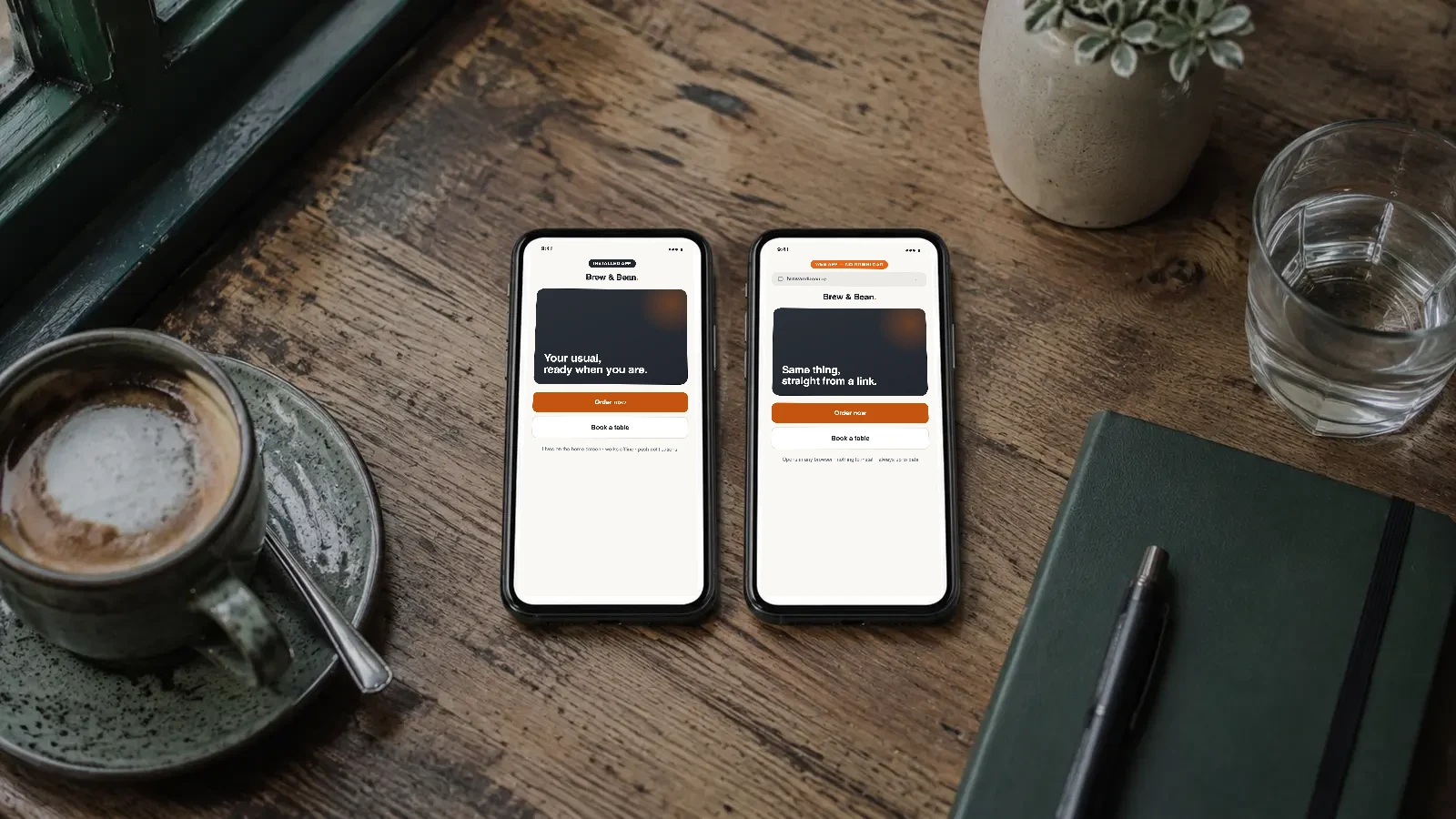
Here’s the bit that saves Irish businesses real money. A web app does a lot of what a normal app does — but it runs from a web link instead of being downloaded from an app store.
No download. No app store approval (or the fees and waiting that come with it). It updates instantly for everyone. And it works on any phone with a browser.
For a huge number of businesses, a web app delivers exactly what they pictured when they said “we need an app” — at a fraction of the cost and time. The full comparison is in do you need an app or a web app? — it’s worth reading before you spend anything.
One app, both kinds of phone
If you do go for a full app, you shouldn’t be paying twice. I build so the same app works on iPhone and Android from a single build — your customers all get the same thing, and you’re not funding two separate projects. It looks and feels native on whatever phone someone happens to own.
What an app actually costs
There’s no single number, because “an app” can mean a simple booking tool or a complex platform. But the shape is predictable:
- A web app is the cheapest starting point — often a fraction of a native app
- A single-build native app (iPhone + Android together) costs more but reaches the home screen
- A complex app with lots of moving parts costs more again
Whatever it is, you’ll get a fixed price before work starts. And I’ll always tell you if a cheaper option would do the job.
Start small, grow later
The smartest move is rarely “build the whole thing at once.” It’s usually: build a simple version first, prove it works, see how people actually use it, then add to it. That keeps your risk low and your spend matched to real results.
The honest bit
Most businesses don’t need an app — yet. I’ll happily tell you if a fast mobile-friendly website or a simple web app would do everything you need for far less. An app is brilliant when it’s the right tool, and a waste of money when it isn’t. You’ll get the honest answer either way.
Getting started
Tell me your idea — the thing you pictured your app doing — and I’ll tell you straight whether an app, a web app, or just a better website is the right call, and roughly what each would cost.
Get in touch, or see the overview on the app development page. No jargon, no pressure, no obligation.