You built a website. You’ve waited. You search for your own business or the services you offer, and you’re nowhere. Page three. Page five. Or just gone entirely.
Frustrating doesn’t cover it. But the good news is that there is almost always a specific, fixable reason an Irish business website isn’t ranking — and it’s rarely some mysterious Google algorithm conspiracy. It’s almost always one of eight things below.
Here’s how to figure out which one is breaking your site, and what to actually do about it.
1. Your site is too slow
This is the single most common problem and the most often ignored. Google has been clear for years that page speed is a direct ranking signal — they call it Core Web Vitals — and slow sites get pushed down.
The Irish reality: most small business websites in Ireland are built on bloated WordPress themes with dozens of plugins, hosted on shared servers that take three to five seconds to deliver a page. By the time the site loads, the visitor has already gone back and clicked your competitor.
How to check: run your site through Google’s free PageSpeed Insights. If your mobile score is under 70, you have a speed problem.
What to do: speed is a structural issue, not a tuning problem. You can install caching plugins all day and you’ll never make a slow WordPress site truly fast. The real fix is rebuilding on a modern static stack — see why I build on Cloudflare instead of WordPress for the technical detail.
2. Google doesn’t know your site exists properly
You’d be amazed how many Irish business websites are not properly indexed. Either the site has a noindex tag left over from development, the sitemap was never submitted, the robots.txt is blocking crawlers, or the site is so new Google hasn’t found it yet.
How to check: go to Google and search site:yourdomain.com. If nothing shows up, Google doesn’t have your site indexed. If only some pages show up, the rest aren’t being crawled.
What to do: create a free Google Search Console account, verify your site, submit your sitemap, and request indexing for the key pages. If pages are missing, check that your robots.txt and meta robots tags aren’t blocking them.
3. You have no local signals
This is the biggest miss for Irish small businesses. A website that says “we provide professional services” without ever mentioning Dublin, Cork, Galway or wherever you actually operate is invisible for local searches.
Google has to be told — explicitly, in the body content — that you serve Dublin, or Cork, or Waterford, or whichever county you’re in. Generic copy doesn’t rank locally.
How to check: read your homepage and service pages. Does every page clearly state the locations you serve? Are the towns, suburbs, and neighbourhoods you cover actually written into the page content? Or is it all just generic marketing speak?
What to do: rewrite your pages with explicit local mentions, build dedicated location pages for each significant area you serve, and add structured data so Google can identify your business type and location. This is the foundation of local SEO for Irish businesses.
4. You’re trying to rank for terms that are too broad
If you’re a plumber in Limerick trying to rank for “plumber”, you’re competing against every plumber in the world. Google’s not going to put a small Limerick business above the established players for a generic term.
The fix is targeting specific local terms. “Plumber Castletroy”, “emergency plumber Limerick city”, “boiler repair Adare” — these are searchable, have real intent behind them, and have far less competition.
How to check: look at your page titles and headings. Are you targeting “Plumber” or “Plumber Limerick — Emergency Callouts in Castletroy, Adare and Co. Limerick”? The second one wins.
What to do: rewrite titles, headings and copy to target the specific local terms your customers actually search for. The Limerick web design page covers the strategy in detail, but the principle applies everywhere.
5. Your Google Business Profile is missing or neglected
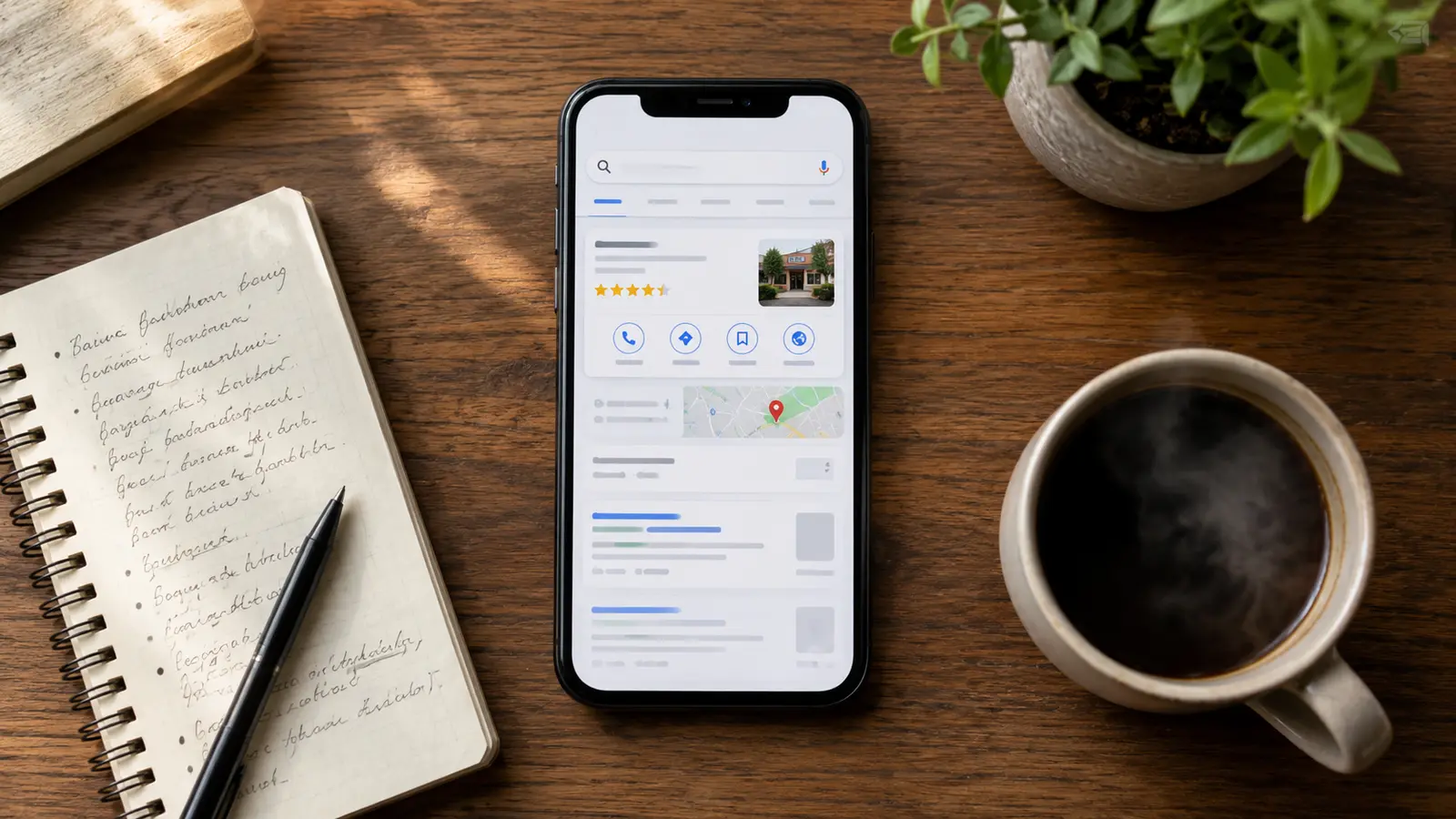
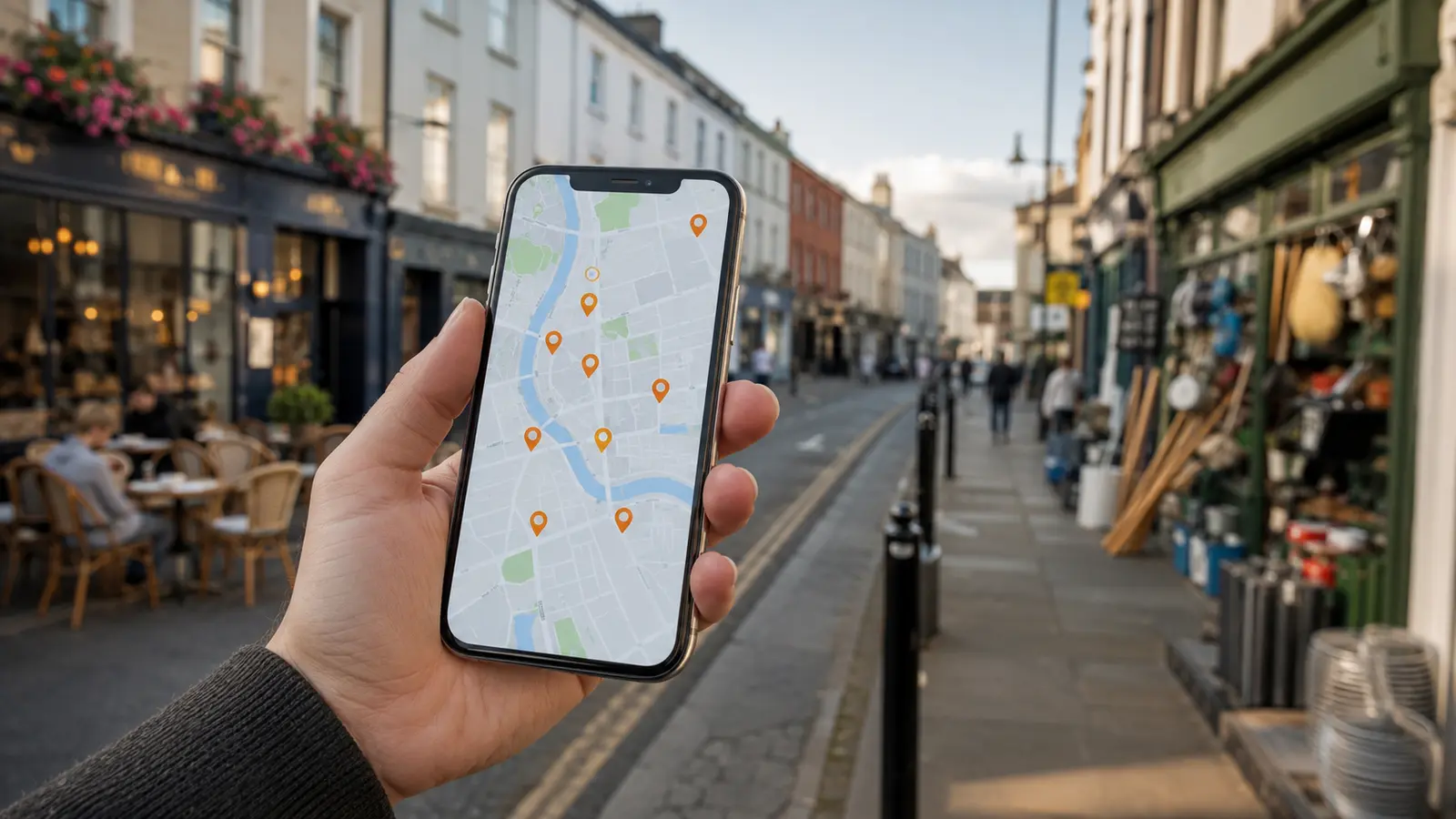
For most Irish local businesses, your Google Business Profile is more important than your website for getting into the map pack — that group of three businesses with a map that appears at the top of local searches. If you don’t have a verified Google Business Profile, you can’t appear there at all. If you have one but never update it, you’ll rank below businesses who do.
How to check: search for your business name on Google. Do you see a profile on the right with photos, reviews, opening hours, and recent posts? If not, your profile is either missing or underdeveloped.
What to do: set it up properly. The complete Google Business Profile guide for Irish businesses walks through every step — verification, categories, photos, posts, reviews, the lot.
6. Your domain is too new
Google’s algorithms heavily favour established domains with a track record. A brand new domain — even a brilliantly built site — typically takes three to six months to start ranking for anything meaningful, and twelve months for competitive local terms in places like Dublin.
There is no fix for this. The clock starts when the domain goes live, and you have to wait.
What to do: be patient and keep building. The longer the domain is live, the more content you add, the more links you earn, the better you rank. Six months from now you’ll be in a dramatically stronger position than today. See how Google ranking actually works for the full picture.
7. You have no backlinks from Irish websites
Backlinks — other websites linking to yours — are a major ranking signal. For local Irish SEO specifically, links from other Irish websites carry significant weight. If your site has zero backlinks, or only links from generic global directories, Google has no real signal that your business is credible in its local market.
How to check: use a free tool like Ahrefs Backlink Checker to see what’s linking to your site. Look at the geographic distribution. Are there any Irish domains in there?
What to do: start building Irish backlinks. The easiest wins:
- List your business on Golden Pages and other Irish directories
- Join your local Chamber of Commerce — most have member directories
- Get listed on industry-specific Irish associations
- If you do interesting work, reach out to local Irish news sites or industry blogs
- Partner with other complementary Irish businesses for cross-promotion
Even five or six relevant Irish backlinks makes a measurable difference early on.
8. Your competitors are simply doing it better
Sometimes the answer is uncomfortable: your competitors have a faster site, better local SEO, more reviews, a longer track record, and more backlinks. You’re not ranking because they’re winning.
How to check: search for your main service in your area. Click into the top three results. How do their sites compare to yours? Speed? Content depth? Reviews on their Google Business Profile? Geographic coverage in their content?
What to do: rather than trying to outrank them on identical terms, find the gaps they’re not covering. Specific neighbourhoods, niche services, long-tail questions. A Cork business competing against the big Cork firms will get further targeting “web design Kinsale” or “web design Midleton” than fighting head-on for “web design Cork”.
The honest fix
If your site isn’t ranking, the chances are it’s a combination of the issues above — usually the technical foundation (speed, structure, indexing), the on-page local signals, and Google Business Profile all need work simultaneously.
The reason most “SEO services” fail to fix this is that they treat ranking like a checklist of optimisations on top of a fundamentally broken site. The site itself — slow, generic, not locally relevant — is the actual problem. Fixing the foundation usually means rebuilding properly, not patching.
If you want a straight answer about why your specific Irish business website isn’t ranking, get in touch. I’ll have a look honestly and tell you what’s actually wrong — even if the honest answer is “the foundation is fine, you just need patience and a few links”. No sales pitch, no obligation.
And if you want to see what a properly built site looks like in your area, the web design index covers every city in Ireland I work in.